Sublimation Vs Screen Printing: Which Is Better For Custom T-Shirts?

Written By
Anna Freeman
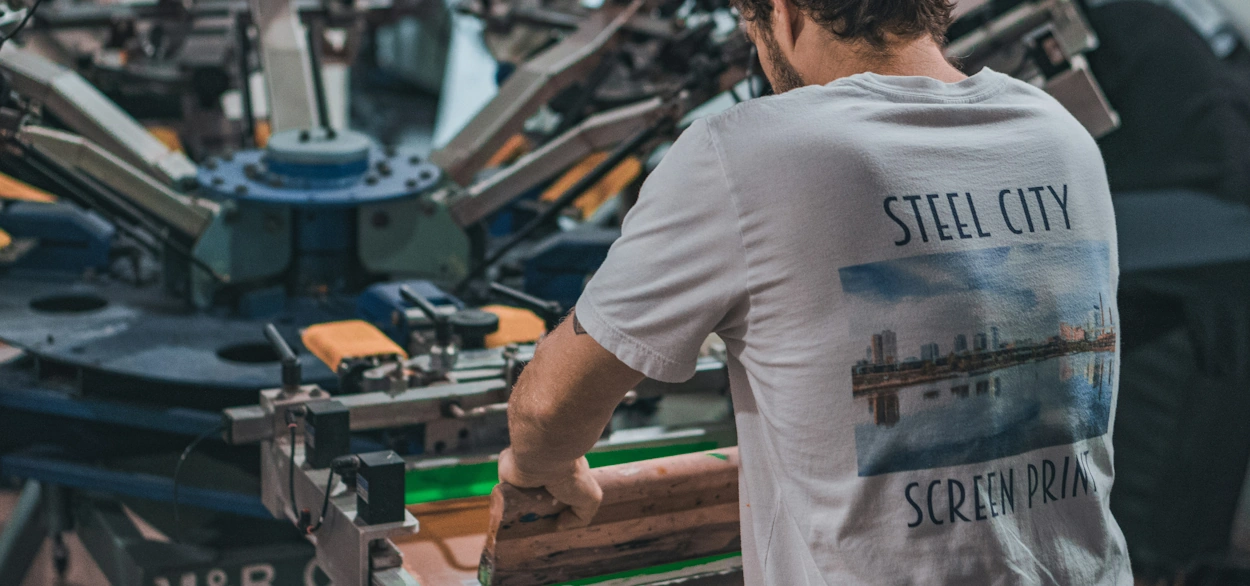
Are you out there looking to get your T-shirts printed?
If yes, the single biggest decision you will make is how you want your design printed.
You see, when it comes to printing customized designs or logos on T-shirts, there are two most popular options, namely sublimation and screen printing. They are both good options for customization; but then, they are better suited for different types of T-shirts.
Now, if you are curious which printing method to choose between these, your answer will depend on some crucial factors. This includes the T-shirt fabric, shirt color, design and finish you want, and how many T-shirts you want to get printed.
For instance, at 5 Star Apparel, we suggest sublimation to our clients who want to get polyester T-shirts printed, while recommending screen printing for all other fabrics.
In this blog, I have explained all the differences between sublimation vs screen printing in detail, including which one you should choose.
So, let’s get into it.
Key takeaways
- Sublimation is best for creating detailed, full-color designs on polyester T-shirts.
- Screen printing is great for all other fabrics, including cotton. Also, it is popular for bold graphics and custom T-shirts.
- Sublimation leaves the fabric feeling unchanged, while screen printing creates an ink layer that you can feel.
- Screen printing setup and color count affects pricing, while sublimation costs depend on the garment and production needs.
- At 5 Star Apparel, we offer both methods with no minimum order quantity.
What is sublimation printing?
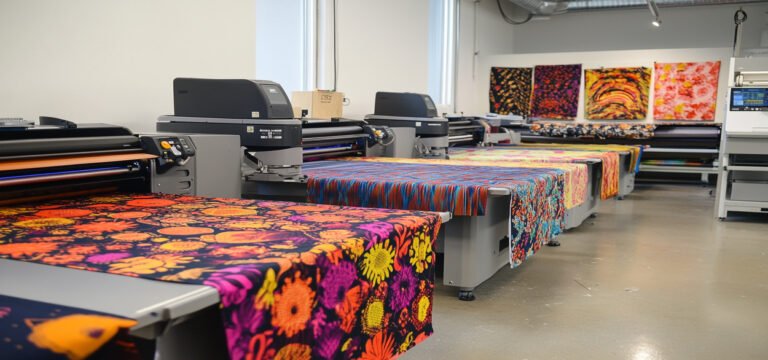
Sublimation printing is a process that uses heat to transfer dye directly into polyester garments like T-shirts. Here, the design is first printed on a special transfer paper using sublimation ink. Then, heat and pressure together turns the ink into gas, making it bond with the polyester fibers on your garment.
Sublimation is different from other T-shirt printing methods. That’s because while others printing methods leave a separate layer of ink on T-shirt that you can feel, sublimation becomes a part of garment fabric, and you don’t feel anything. Meaning sublimated T-shirts retain their original texture even though there are so many designs and colors printed onto them.
This is also why we recommend sublimation to those clients who want custom patches without that raised or heavy feel.
Also, sublimation is well-known for its ability to reproduce detailed artwork, photographs, gradients and colorful patterns. The designs here are so detailed that they look like high-definition photographs. That’s why at 5 Star Apparel, we use sublimation for all-over designs that cover more than just the chest or back.
The only limitation
Although sublimation works really well on white and light-colored polyester T-shirts, it is not ideal for dark color T-shirts as designs tend to get hidden on darker garments.
What is screen printing?
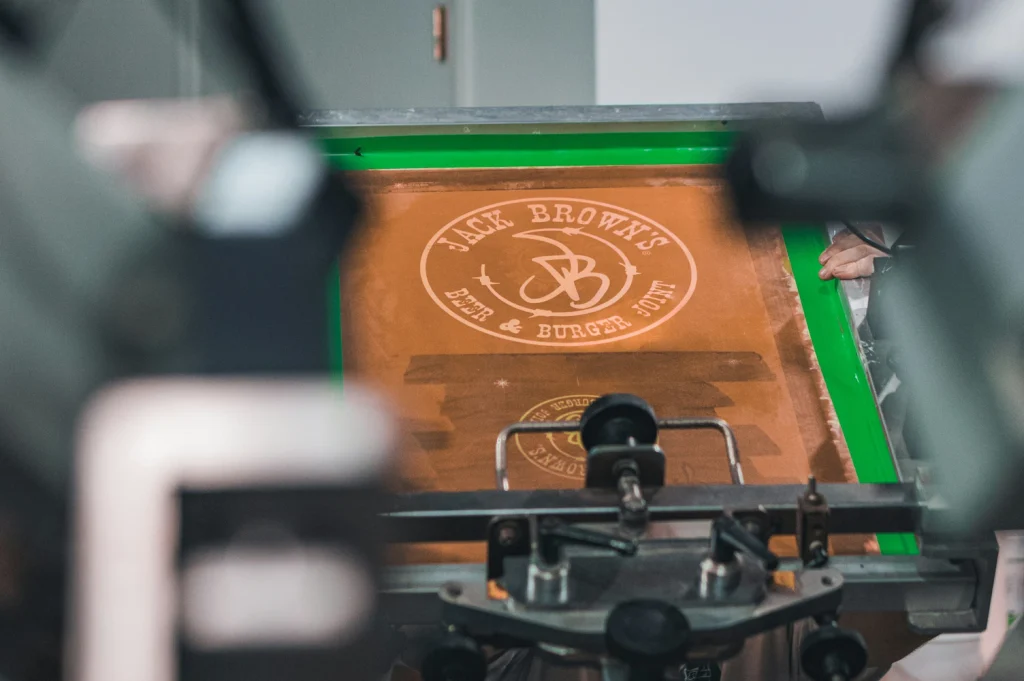
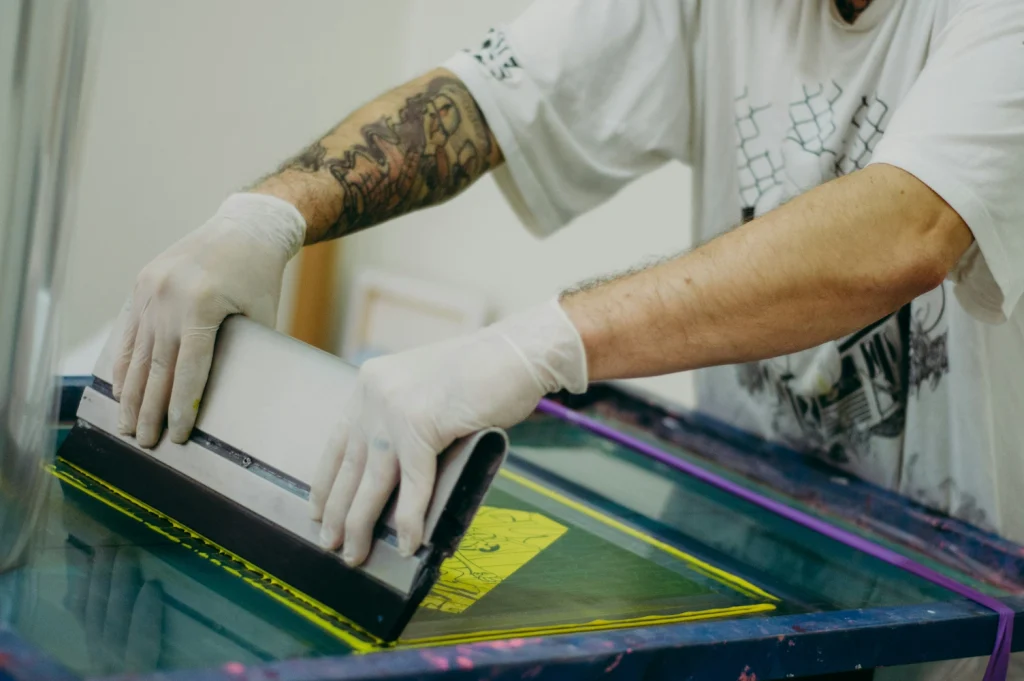
Screen printing is a very well-known process of printing T-shirts and other garments with ink, mesh screen, and stencil. Here, printers transfer a design onto your T-shirt by pushing ink through the open areas of a special purpose screen. And depending on how many colors your design has, each color is transferred through a separate screen.
Although custom screen printing is much more time and labor intensive than sublimation, it is still quite popular. That’s because you can use it on a huge range of garments, including cotton, cotton-polyester blends, and synthetic garments (if you use the correct ink and production process). At 5 Star apparel, we almost certainly suggest screen printing to those clients who want big logos and letters, clear graphics, and clean designs for team outfits.
Screen printing also creates neat and clearly visible designs on dark color T-shirts with the help of opaque inks and an underbase (if needed).
Also, although the texture of screen printing is something you can feel, it is not very thick or heavy. In fact, with high-quality water-based inks, our experts create very soft print finishes on T-shirts.
The only limitation
Screen printing is not ideal for polyester T-shirts as the heat created during printing and curing makes the T-shirt’s own dye mix with the print’s ink. This changes the print color and you don’t get the desired result.
Sublimation vs screen printing: 6 Differences and how they affect your ideal option
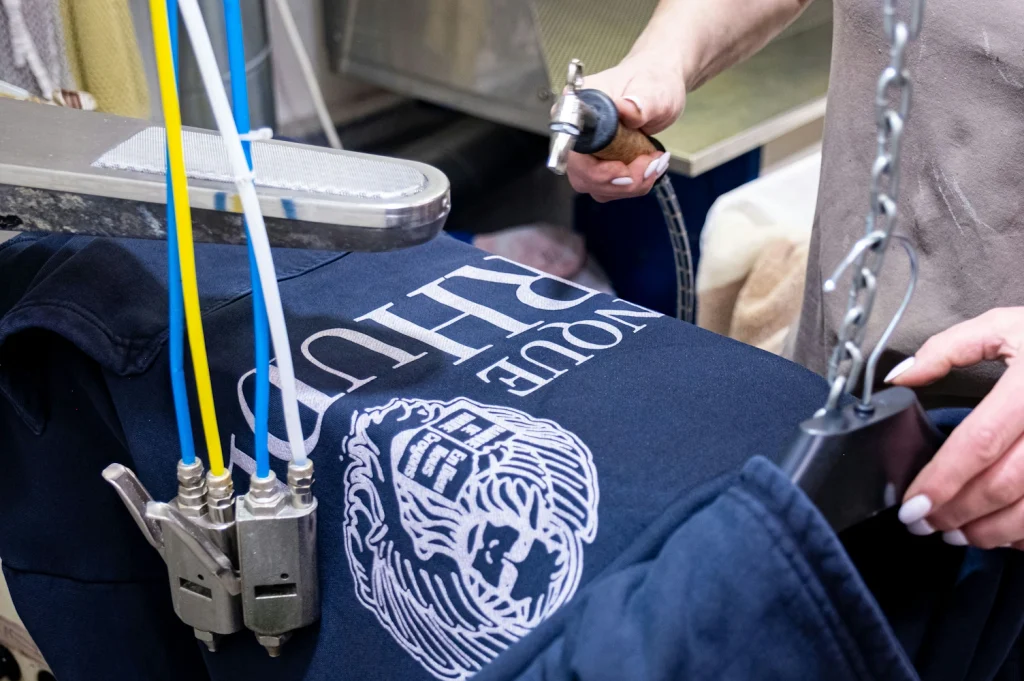
To begin with, both screen print and dye sublimation printing are well-known printing methods and they both create high-quality designs meant to last. But then, the results you get from each of the printing methods can be different based on which fabric you are printing on.
That’s why my advice is you choose between these methods based on your apparel, design, and the total number of T-shirts you want to get printed. I have explained the difference between screen printing and sublimation below to help you do exactly this.
Here’s a quick look at the difference between sublimation printing vs screen printing:
| Factor | Sublimation | Screen printing |
| Best fabric | Polyester and suitable synthetic blends | Cotton, cotton blends, and suitable synthetic fabrics |
| Shirt colors | Works best on white and light-colored garments | Works on both light and dark-colored garments |
| Design | Ideal for photographs, gradients, and multicolor artwork | Ideal for logos, lettering, and bold graphics |
| Print feel | No separate ink layer, the print blends with fabric | You can feel the print, but the intensity depends on ink type and application |
| Durability | Dye bonds with polyester fibers and lasts really long | Longevity depends on the ink, curing, and garment compatibility |
| Order quantity | Best for both small and large orders | It is more cost-effective for bigger quantities |
Now, let’s look at these differences in more detail.
#1. Fabric compatibility
Your T-shirt fabric is the most important factor when choosing between sublimation vs screen printing.
Sublimation works best on polyester because the dye bonds with polyester fibers under heat. That’s why you’ll commonly find it on performance shirts, sportswear and other polyester apparel.
You can also sublimate some polyester blends, but then the result will be less vibrant because the dye does not bond with the cotton fibers.
Screen printing, on the other hand, is more flexible. You can use it on cotton, cotton-polyester blends, and some synthetic fabrics, given that you use the right ink and printing process.
My take: If you have bought a cotton T-shirt, go for screen printing without any second thought. But if you have bought a polyester T-shirt, sublimation is the better option.
#2. Light vs dark color garments
Another big difference between screen print vs sublimation is how the final result looks on different garment colors.
As I said earlier, sublimation is ideal only for white or light-colored polyester T-shirts. That’s because the dyes here are transparent and your T-shirt’s color can affect how the printed design looks on it.
Also, traditionally sublimation doesn’t use white ink, which means if you have a dark color T-shirt, it won’t create a bright white design on it,
Screen printing, on the other hand, is a very flexible option. So much so that with opaque inks and an underbase, designs can stand out on black, navy, red, or any other dark-colored garments.
So, if you want a colorful design on a dark color cotton T-shirt, screen printing is the best choice.
#3. Design complexity and color options
Does the design that you want on your T-shirt include photographs, color gradients, detailed illustrations, and a lot many colors?
If yes, then sublimation is arguably the best choice as it can create complex art without needing a different screen for every color in the design.
Screen printing, at the same time, is ideal for big logos, letters, simple illustrations, and designs with solid colors.
Yes, multicolor screen printing is possible. In fact, at 5 Star Apparel, we regularly work on screen printing projects where a diverse range of colors are involved. But extra colors do need more screens, setup, and production, which increases the time and cost.
My take: For designs with photographs or gradient-heavy artwork, sublimation is the best option.
#4. Print feel and durability
When it comes to print feel, sublimation almost always stands out. That’s because you don’t feel any extra texture of the print on your T-shirt. The dye simply bonds with the polyester fibers and the T-shirt retains its original fabric texture.
Now, since screen printing applies ink to the fabric, the finished design has a noticeable feel for sure. However, how much of the print you feel depends on the ink and how it is applied. For instance, while some prints do have a heavier finish, water-based inks have a very soft feel.
Talking about durability, both the printing methods are excellent. Sublimated prints last really long as they don’t crack or peel like separate printed layers do. Screen-printing can also have a good longevity when properly selected and cured. So you need not worry about cracks or peels due to regular wear and washing.
#5. Cost and order quantity
Screen printing is more cost-efficient only if you are ordering in bulk. That’s because for each design color we need to prepare separate screens. This setup work is what adds to the cost. And when the same setup is spread across a big order, the costs do come down.
Sublimation doesn’t require screen preparation, so the cost doesn’t depend on order quantity. It instead depends on the garment, artwork, materials, printing time, and production requirements.
At 5 Star Apparel, we offer both methods with no minimum order quantity. Whether you need a few custom T-shirts or a large batch, you can get in touch with us, and we will create a free quote for your order.
#6. Print coverage and all-over designs
If you want your design to cover a big portion of your T-shirt, sublimation printing is the best option. Here, options like all-over sublimation means your design can go beyond just the back and chest to include the body and sleeves. In fact, even finished polyester T-shirts can be sublimated.
Screen printing, on the other hand, is more suitable for specific print locations, like the front, back or sleeves. Specialized all-over screen-printing is also possible, and it is something we do at 5 Star Apparel. But it needs a different production process.
Sublimation vs screen printing cost: What can you expect in Northern California?
For starters, the total cost of screen printing depends on how many T-shirts you are getting printed. That’s because for every order, printers need to set up a different screen and production. So big orders mean the same set-up can be utilized throughout.
Here’s the total cost of screen printing you can expect in Northern California:
| Order size | Cost per shirt |
| 24-49 shirts | $12-$20 |
| 50-99 shirts | $9-$16 |
| 100-249 shirts | $7-$14 |
| 250-499 shirts | $5-$12 |
| 500 or more shirts | $4-$10 |
Sublimation printing, at the same time, can cost you in the range of $18-$20 per shirt for a smaller batch of 10-50 shirts. If you order a bigger batch of 50-200 printed T-shirts, you can expect this cost to come down to $10-$15 per shirt (depending on artwork and total print area).
Which printing method is better for your T-Shirts?
The best printing method between screen printing vs sublimation depends on your T-shirt’s garment, the design you want, and how you want to use the T-shirts. Here are some common situations to help you decide:
- Cotton T-shirts: Screen printing is the better fit. Sublimation dye doesn’t bond properly with cotton.
- Polyester sportswear: Sublimation is an excellent option, especially for performance T-shirts that need colorful graphics without a separate ink layer.
- Company uniforms and event shirts: Screen printing works well for repeated logos and bold designs, especially when you’re ordering a big batch.
- Full-color artwork: Sublimation is a strong choice for white or light-colored polyester garments with photographs, gradients, and detailed designs.
- All-over designs: Sublimation is the better option when you want artwork across most of the garment rather than at a single print location.
Bonus: Here are two more printing options you can consider
- Direct-to-film (DTF): It transfers a design from a special film onto a garment using heat and adhesive. It can work on cotton, polyester and many blends, including dark-colored shirts, making it useful for detailed, full-color designs.
- Direct-to-garment (DTG): It applies ink directly to the shirt. It’s commonly used for detailed artwork on cotton garments and can be suitable for smaller orders.
FAQs about sublimation vs screen printing
Is sublimation better than screen printing?
Neither method is better for every project. Sublimation is suitable for light-colored polyester garments, detailed artwork, and all-over designs. Screen printing is more versatile and works on all garment colors, It is best for cotton T-shirts, bold graphic designs, and bulk orders.
Is sublimation cheaper than screen printing?
It depends on the order. Sublimation avoids the screen setup required for screen printing, which makes it a practical option for smaller quantities and full-color designs. Screen printing, at the same time, becomes more economical as order quantities increase, especially for designs with fewer colors.
Can you use sublimation printing on cotton shirts?
Traditional sublimation printing is not suitable for regular cotton T-shirts. Its dye needs polyester fibers to bond properly with the fabric. That’s why, on cotton T-shirts, the results won’t have the same color strength or durability. If you want to print on a cotton shirt, screen printing is a better option.
Which lasts longer: Sublimation or screen printing?
Both can produce long-lasting results when the correct materials and production processes are used.
Sublimation dye bonds with polyester fibers, so there is no separate print layer to crack or peel.
Screen printing can also be very durable when the ink is compatible with the garment and properly cured.
To sum up
I am sure, at this point, you have a decent idea about all the differences between sublimation vs screen printing.
If you are comparing both the options for T-shirt printing, I suggest you first check your T-shirt’s garment and then choose a printing method.
If you’re using a light-colored polyester shirt and want detailed or all-over artwork, sublimation is a solid choice. But if you’re printing cotton shirts, bold logos, or a big batch of T-shirts with the same design, screen printing makes absolute sense.
Got more questions or want to get your T-shirts printed?
You can get in touch with us!
At 5 Star Apparel, we offer both sublimation and screen printing, with no minimum order quantity for either. If you’re unsure which printing method suits your project, share your design, garment preference, and quantity, and we will help you choose a printing method that fits your needs the best.
Anna Freeman is the owner of 5 Star Apparel. With over 20 years of industry experience, she brings expert insights on embroidery, screen printing, and branded apparel, helping businesses and organizations bring their ideas to life with confidence and style.