DTF Vs Screen Printing: Which Is Better For Your Brand?

Written By
Anna Freeman
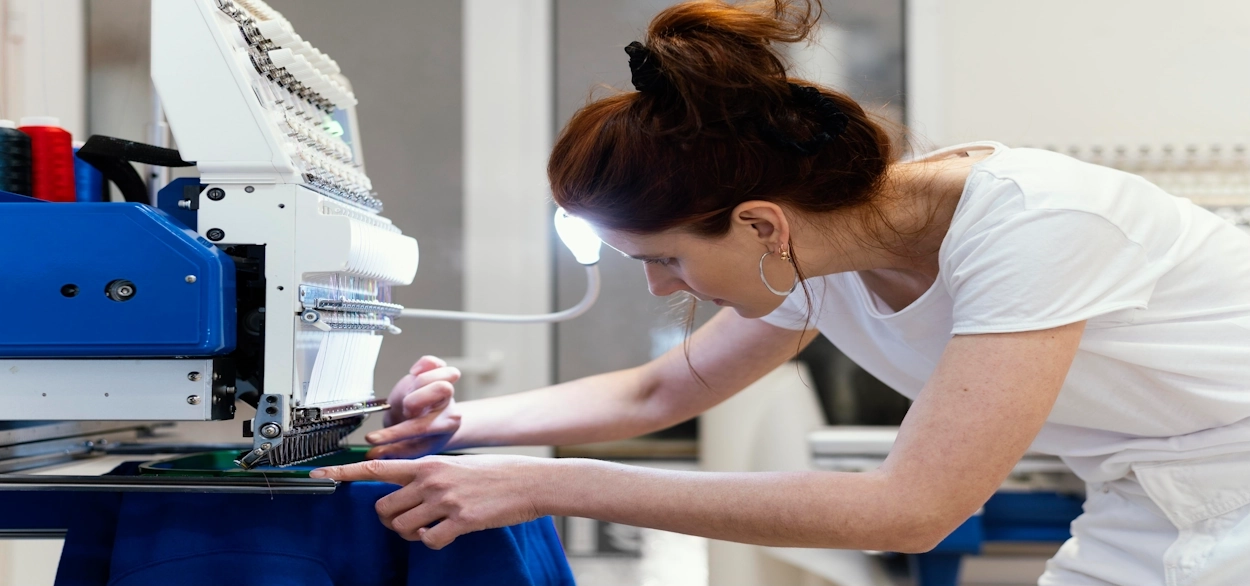
Planning to order custom t-shirts, hoodies, uniforms, or promotional apparel?
If yes, you might have come across two apparel printing methods, namely DTF and screen printing.
At first look, both methods can look almost the same, as they both produce vibrant, high-quality prints.
But then, each printing method has its own strengths. And the right method for you depends on what you’re printing, how many pieces you need, your design, and your budget.
For instance, if you’re ordering a few shirts with a colorful logo, DTF printing might be the better option.
However, if you’re printing hundreds of company uniforms or event t-shirts, screen printing is the more cost-effective and durable option.
In this blog, I have explained it all in a very simple way so you can confidently choose the right printing method for your branded apparel.
So, read on to know:
- What is DTF printing
- What is screen printing
- The biggest differences between DTF vs screen printing
- Which method is more durable
- How much each printing method costs in California
- And much more.
Key takeaways
- DTF and screen printing are both popular methods for branded apparel printing, but they work differently.
- DTF is ideal for small orders with full-color and highly detailed designs.
- Screen printing is the better choice for large orders with simple artwork.
- Screen printing offers a softer feel on large production runs.
- Both methods are durable when printed correctly and cared for properly.
- The right method depends on your artwork or logo, quantity, budget, and project goals.
What is DTF printing?
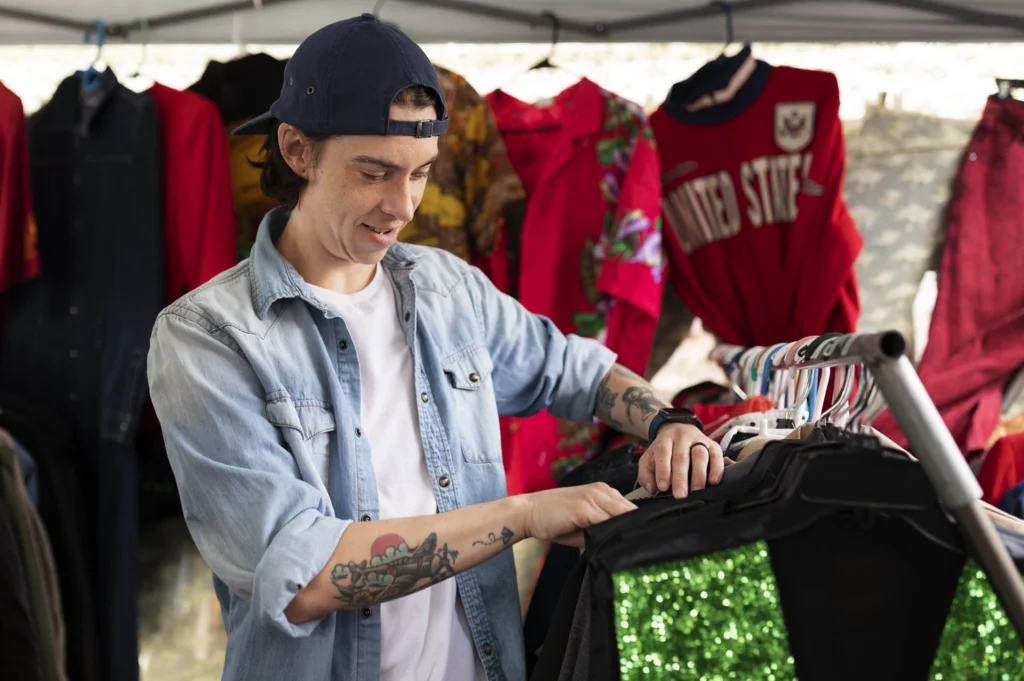
DTF, also called Direct-to-Film, is a printing method where a design is first printed onto a special transfer film and then applied to fabric using a heat press.
Here, the design is printed using textile pigment inks, coated with adhesive powder, cured, and then transferred onto the garment.
DTF printing gives a vibrant, detailed print that works on a wide variety of fabrics, including:
- Cotton
- Polyester
- Cotton-poly blends
- Performance fabrics
One of the biggest advantages of DTF printing is that it can reproduce complex artwork with multiple colors, gradients, and fine details without needing separate screens for each color.
That’s why it’s become a popular option for custom apparel, especially for smaller orders and personalized designs throughout California.
From embroidery to screen printing and custom patches, we help you create high-quality custom apparel that stands out.
What is screen printing?
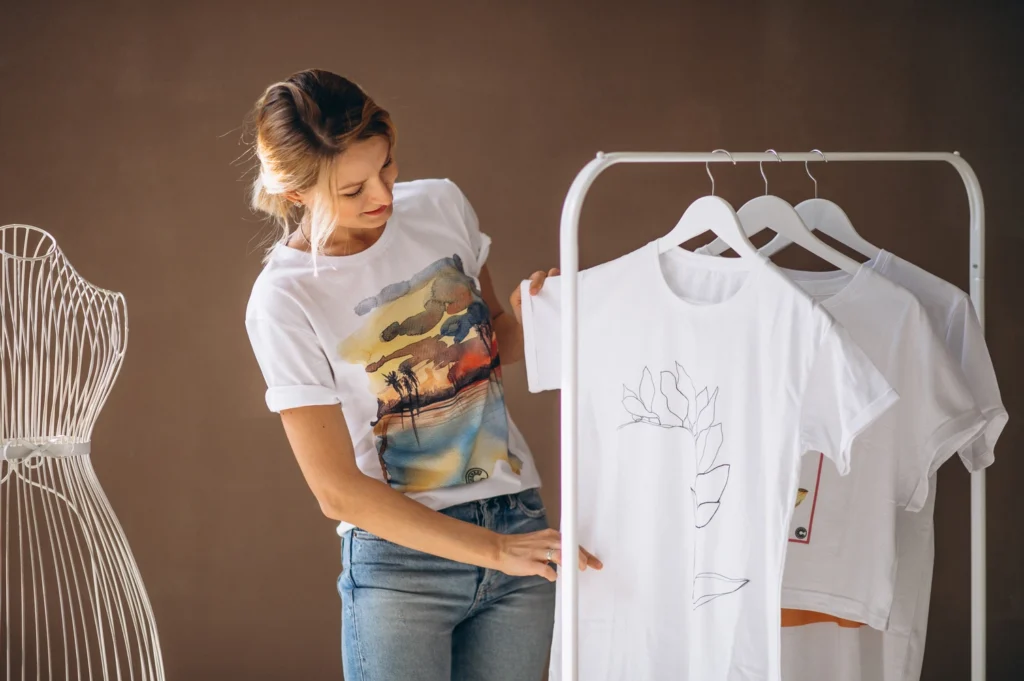
Screen printing is one of the oldest and most trusted apparel printing methods.
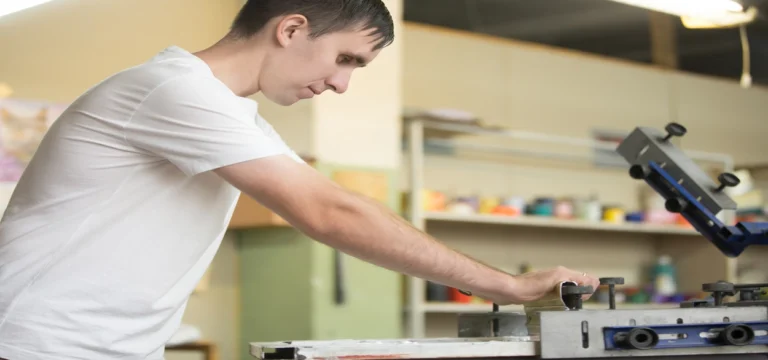
Instead of printing directly onto the garment, screen printing pushes ink through a mesh screen onto the fabric. Here, a separate screen is created for each color in the design.
While the printing setup takes more time than DTF, it delivers excellent consistency, vibrant colors, and outstanding durability, especially for larger apparel production.
Screen printing is commonly used for:
- Company uniforms
- School apparel
- Sports team jerseys
- Event t-shirts
- Promotional merchandise
In fact, at 5 Star Apparel, custom screen printing is one of our most popular services because it produces professional-looking apparel that stands up well to regular wear and repeated washing. If you want to order custom apparel in large quantities, it is one of the most economical options available.
DTF vs screen printing: What’s the difference?
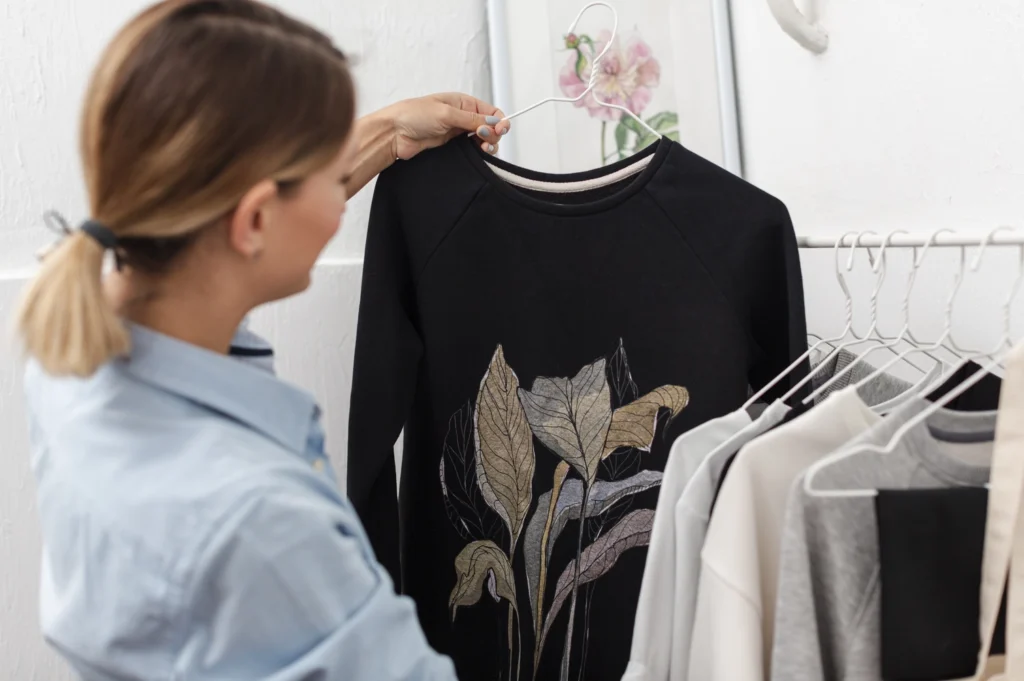
Now that you have a basic understanding of both printing methods, let’s compare screen printing vs DTF side by side.
Although both produce high-quality custom apparel, they differ in several important ways, such as:
1. Print quality
Both DTF and screen printing produce excellent-looking prints. However, they work better in different situations.
DTF printing works well when the design includes:
- Photographs
- Gradients
- Small text
- Intricate artwork
- Unlimited colors
Since the design is printed digitally, there’s virtually no limit to the level of detail that can be reproduced.
Screen printing, on the other hand, is known for producing bold, vibrant colors with exceptional consistency. It works especially well for:
- Company logos
- Brand graphics
- Team uniforms
- Simple artwork with solid colors
If your design uses just a few colors, screen printing often creates a cleaner, more vibrant result.
2. DTF vs screen printing durability
Both printing methods are highly durable when produced correctly and cared for properly.
However, there are some differences.
Screen printing has built its reputation over decades for producing long-lasting prints. Here, since the ink becomes part of the fabric during the curing process, it holds up exceptionally well to frequent washing and everyday wear.
DTF printing is also very durable. Modern UV DTF transfers are designed to resist cracking, peeling, and fading, and many can last for dozens of wash cycles when applied correctly.
That said, screen printing still has a slight edge for long-term durability, especially on large production runs and workwear that sees heavy use.
3. Feel on the fabric
When comparing DTF vs screen print, it’s important to talk about how the print actually feels. After all, you don’t just see your custom apparel, you wear it.
DTF printing creates a thin layer that sits on top of the fabric. This gives it a smooth finish. But on larger designs, you might feel the print more when wearing the garment.
Screen printing can feel different depending on the ink and design.
For instance, a large plastisol print can feel slightly thicker, while water-based inks can feel much softer because they soak into the fabric rather than sitting on top of it.
So, if comfort is one of your biggest priorities, screen printing is better, particularly for simple logo designs.
4. Design complexity
This is where DTF really stands out. Since it is a digital printing process, you can print full-color artwork, photographs, gradients, fine details, and small text without creating separate screens.
Screen printing can certainly handle multiple colors, but every additional color requires another screen and additional setup.
That’s why more detailed artwork can become more time-consuming and expensive with screen printing.
So, if your design includes lots of colors and intricate details, DTF is the better option.
5. DTF vs screen printing cost
When it comes to the cost of DTF vs screen printing, there isn’t a fixed answer. That’s because the total cost of custom apparel printing in California depends largely on your order quantity.
For smaller orders, DTF is more affordable because there’s very little setup involved.
With screen printing, each color requires its own screen, so the initial setup costs are higher. However, once those screens are created, the cost per shirt drops significantly as your order size increases.
That’s why, for bulk orders, screen printing is the more economical choice.
Here’s a quick comparison of what offers more value for money:
| Order Size | Better Value |
| 1-20 shirts | DTF printing |
| 20-50 shirts | Depends on the design |
| 50+ shirts | Screen printing |
Pro tip: If you’re ordering apparel for your employees, school, sports team, or an upcoming event, screen printing often provides the best value without compromising on quality.
6. Fabric compatibility
Both DTF and screen printing work on a wide variety of fabrics. However, they each have their strengths.
DTF works well on:
- Cotton
- Polyester
- Cotton blends
- Performance fabrics
Since the design is transferred using heat, it adapts easily to different fabric types without requiring major process changes.
Screen printing is equally versatile and works exceptionally well on many of the same materials. But it is especially popular for cotton apparel, company uniforms, promotional t-shirts, and sportswear.
When handled by an experienced custom apparel printer, both methods produce excellent results on the right garments.
Here’s a quick comparison between DTF vs screen printing:
| Feature | DTF Printing | Screen Printing |
| Best for | Small orders | Large orders |
| Design complexity | Excellent for detailed artwork | Best for simple graphics |
| Number of colors | Unlimited | Best with fewer colors |
| Setup | Minimal | Requires screen setup |
| Durability | Excellent | Excellent, with a slight edge |
| Feel | Thin printed layer | Softer on many designs |
| Cost | Better for small quantities | Better for bulk orders |
DTF printing vs screen printing: Which is better?
By now, you probably have a clear idea about the difference between DTF VS screen printing.
But which one should you choose?
Well, the answer depends on what you need.
For instance, DTF printing might be the better option if you:
- Need a small number of shirts
- Have complex, full-color artwork
- Want to print photographs or detailed designs
- Need quick customization
- Are creating personalized products
At the same time, screen printing is the better choice if you:
- Need a larger quantity of shirts
- Are printing company uniforms
- Need promotional apparel
- Have a simple logo or design
- Want the lowest cost per shirt at higher volumes
- Need long-lasting prints for regular use
Simply put, neither method is automatically better. The right choice depends on your design, quantity, budget, and the purpose of your apparel.
From embroidery to screen printing and custom patches, we help you create high-quality custom apparel that stands out.
Final words
I am sure that you now have a much better understanding of DTF vs screen printing and which option might work best for your apparel needs.
As you can see, both methods have their own advantages.
DTF printing is excellent for detailed designs, smaller orders, and businesses that need flexibility.
Screen printing, on the other hand, remains one of the best choices for bulk apparel, company branding, uniforms, and promotional products because of its durability and cost-effectiveness.
Need help choosing the right printing method for your custom apparel?
You can get in touch with us!
At Five Star Apparel, we help businesses, organizations, teams, and individuals create high-quality custom apparel with professional printing solutions. Whether you need screen printing for a large order or guidance on choosing the right decoration method, we are here for you.
FAQs about DTF vs screen printing
What is the difference between DTF and screen printing?
The main difference is how the design is applied to the garment.
DTF printing uses a digital transfer film that is heat pressed onto the fabric, while screen printing pushes ink directly through a mesh screen onto the apparel.
DTF is better for detailed designs, while screen printing is often better for larger orders.
Is DTF better than screen printing?
It depends on your project.
DTF is better for small orders, colorful designs, and detailed artwork.
Screen printing is often better for bulk orders, simple designs, and long-term durability.
Is screen printing better than DTF?
For many businesses and large apparel orders, screen printing can be the better choice because it offers excellent durability, consistent quality, and lower costs at higher quantities.
However, DTF may be better for smaller or more detailed projects.
Which lasts longer, DTF or screen printing?
Both methods are durable when printed correctly.
However, screen printing generally has a slight advantage for heavy-use apparel because the ink bonds strongly with the fabric and performs well through repeated washing.
Is DTF more expensive than screen printing?
For small orders, DTF is often more affordable because it requires less setup.
For larger orders, screen printing is usually more cost-effective because the cost per shirt decreases as quantity increases.
What is the difference between screen print and DTF feel?
DTF prints create a thin layer that sits on top of the fabric.
Screen printing can provide a softer feel, especially when using certain inks and printing techniques.
The final feel depends on the design size, ink type, and garment.
Which printing method is best for a clothing brand?
Both methods can work well for clothing brands.
DTF is useful for limited releases, small batches, and detailed artwork.
Screen printing is often preferred for larger collections because it provides consistent quality and better pricing at scale.
Is screen printing still popular in 2026?
Yes.
Even with newer printing technologies available, screen printing remains one of the most widely used apparel printing methods because of its durability, reliability, and cost-effectiveness for larger orders.
Anna Freeman is the owner of 5 Star Apparel. With over 20 years of industry experience, she brings expert insights on embroidery, screen printing, and branded apparel, helping businesses and organizations bring their ideas to life with confidence and style.