What Is Screen Printing? Benefits, Process, and Uses Explained

Written By
Anna Freeman
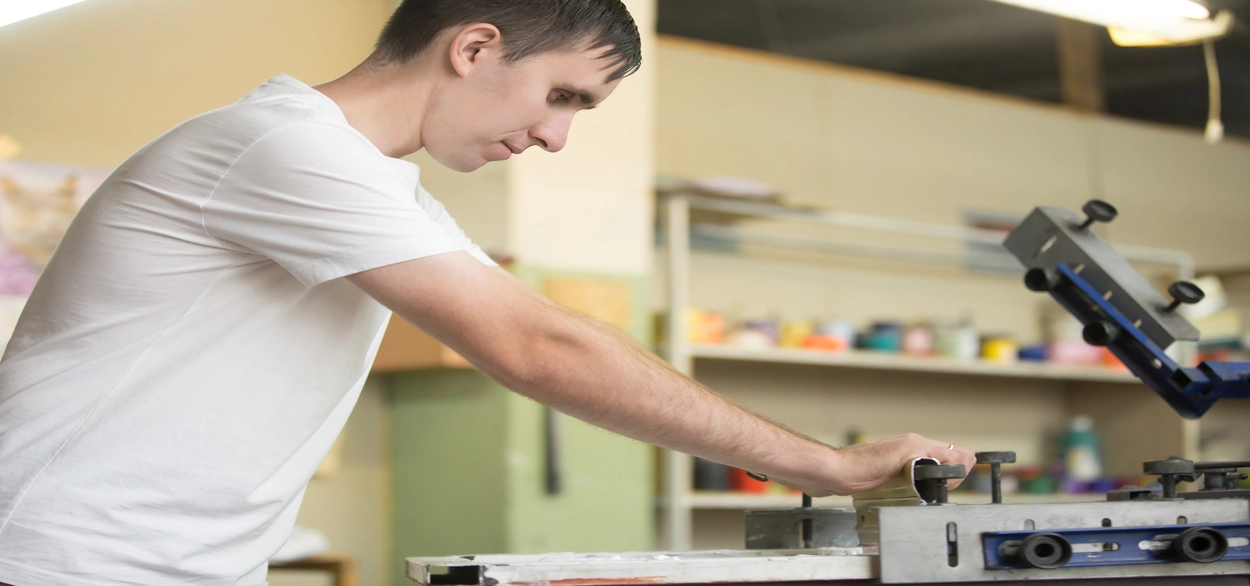
From screen printing and embroidery to dye sublimation and digital printing, there are several printing methods used for custom apparel printing.
But among all these options, screen printing is one of the most popular and widely used printing methods for bulk apparel orders.
And it isn’t just volume as screen printing also helps businesses create high-quality designs t-shirts, team uniforms, branded workwear, and promotional apparel.
But what is screen printing really?
Even if you’ve heard about screen printing before chances are you don’t know how it’s done and how it can benefit your business.
That’s why, in this blog, I have explained everything about screen printing, including:
- How the screen printing process works
- What materials and fabrics are best for screen printing
- The most common uses of screen printing
- The benefits of screen printing
- And much more.
So, let’s get started.
Key takeaways
- Screen printing uses a mesh screen and stencil to transfer ink onto a surface.
- Each color in a design requires a separate screen during printing.
- Screen printing creates durable, vibrant prints that work well for bulk orders.
- It is commonly used for screen printed t-shirts, uniforms, hoodies, and promotional apparel.
- Cotton and cotton-blend fabrics are among the best fabrics for screen printing.
What is screen printing?
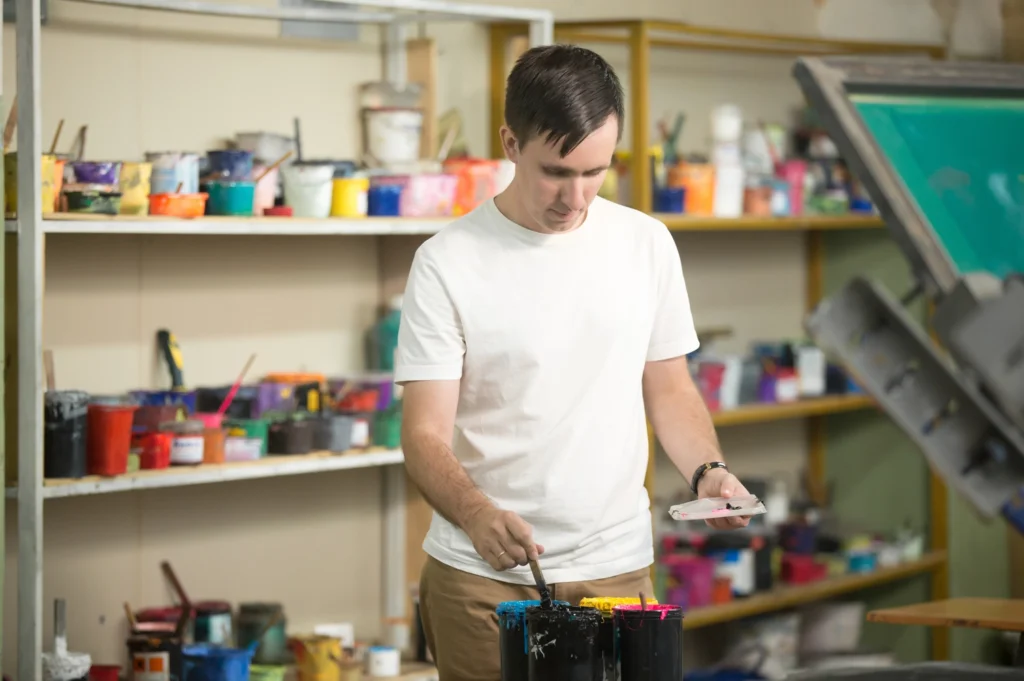
For starters, screen printing is a printing method that uses a mesh screen, stencil, and ink to transfer a design onto a material.
Unlike digital printing methods like dye sublimation, where a printer applies ink directly onto a surface, screen printing uses physical screen to push ink through specific areas and create design.
Interestingly, screen printing is not a new printing method. It has been used for hundreds of years and has evolved from traditional stencil-based techniques into a modern printing process used by businesses, artists, and apparel manufacturers.
You’ll commonly find screen printing on:
- Screen printed t-shirts
- Hoodies
- Team uniforms
- Workwear
- Sports apparel
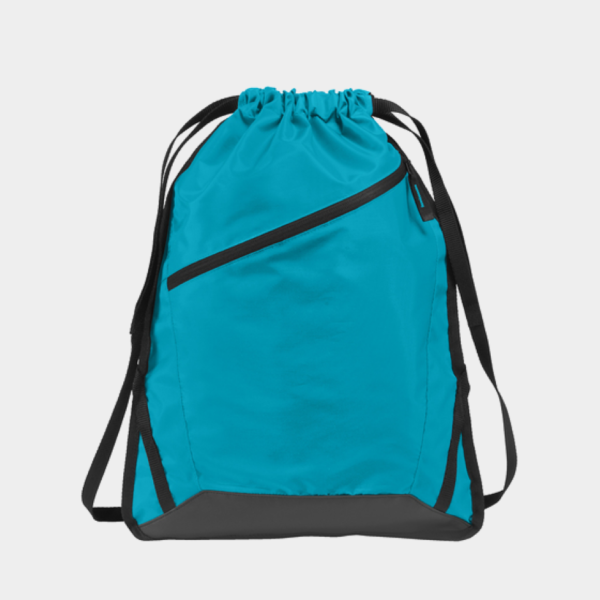
- Tote bags
- Promotional products
- Posters
- Signs
- Branded merchandise
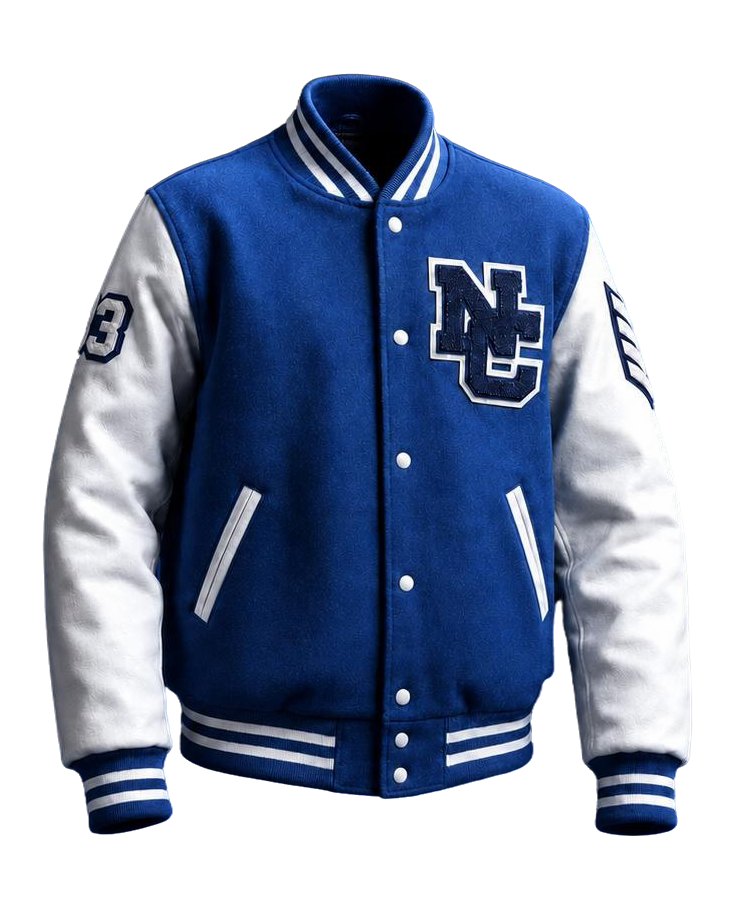
From embroidery to screen printing and custom patches, we help you create high-quality custom apparel that stands out.
How does the screen printing process work?
The screen printing process is simple.
A design is first transferred onto a mesh screen. Here, some areas of the screen are blocked, while the open areas allow ink to pass through.
Then, ink is pushed across the screen using a tool called a squeegee. The ink moves through the open areas of the screen and lands onto the material under.
For multi-color designs, each color is printed separately using a different screen.
For instance, if a T-shirt design has three colors, the printer needs three separate screens, one for each color.
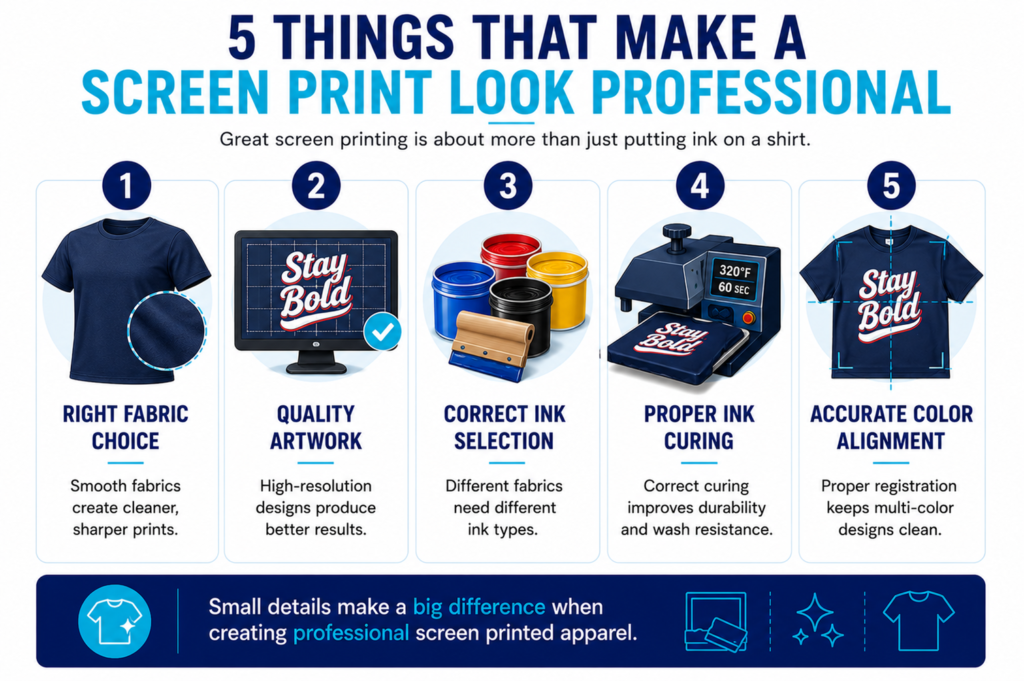
After all colors are printed, the garment goes through a curing process where heat is applied to help the ink properly bond with the fabric. This creates a permanent printed design on the garment.
Overall, here’s how the screen printing process looks like:
Step 1. The design is created
The design is created using graphic design software and then separated into different colors.
This step is important because each color in the design requires its own screen. For instance, a simple one-color logo may only need one screen, while a detailed design with multiple colors will require several screens.
Step 2. The screen is prepared
Next, a mesh screen is coated with a light-sensitive photo emulsion and allowed to dry.
A film positive containing the design is then placed over the screen and exposed to UV light. The emulsion hardens wherever the light reaches it, while the areas blocked by the artwork remain soft.
The screen is then washed with water, removing the soft emulsion and leaving open mesh where ink will pass through. The hardened emulsion stays in place, creating a stencil for printing..
Step 3. Ink is applied through the screen
Once the screen is ready, it is placed over the material that needs to be printed.
Ink is added on top of the screen, and a squeegee is used to push the ink across the surface.
The pressure from the squeegee forces the ink through the open areas of the stencil and onto the fabric. This creates the printed design.
For designs with multiple colors, the same process is repeated using different screens for each color.
Step 4. The print is cured
After the design has been printed, the product goes through a curing process.
During this stage, heat is applied to dry and set the ink properly. This helps the ink bond with the fabric and improves the durability of the print.
A properly cured screen print can handle regular washing and everyday wear without cracking or peeling.
Step 5. The finished product is inspected
The final step is checking the printed product for quality.
Here, the printer makes sure the colors are aligned correctly, the design looks clean, and the ink has properly cured.
Once approved, the finished products are ready to be packed, shipped, or delivered to customers.
In short, here’s how the screen printing process works:
| Step | What happens |
| Design creation | Artwork is prepared and separated into colors |
| Screen preparation | A stencil is created on the mesh screen |
| Ink printing | Ink is pushed through the screen onto the material |
| Curing | Heat sets the ink and improves durability |
| Quality check | The final print is inspected before delivery |
What can you print using screen printing?
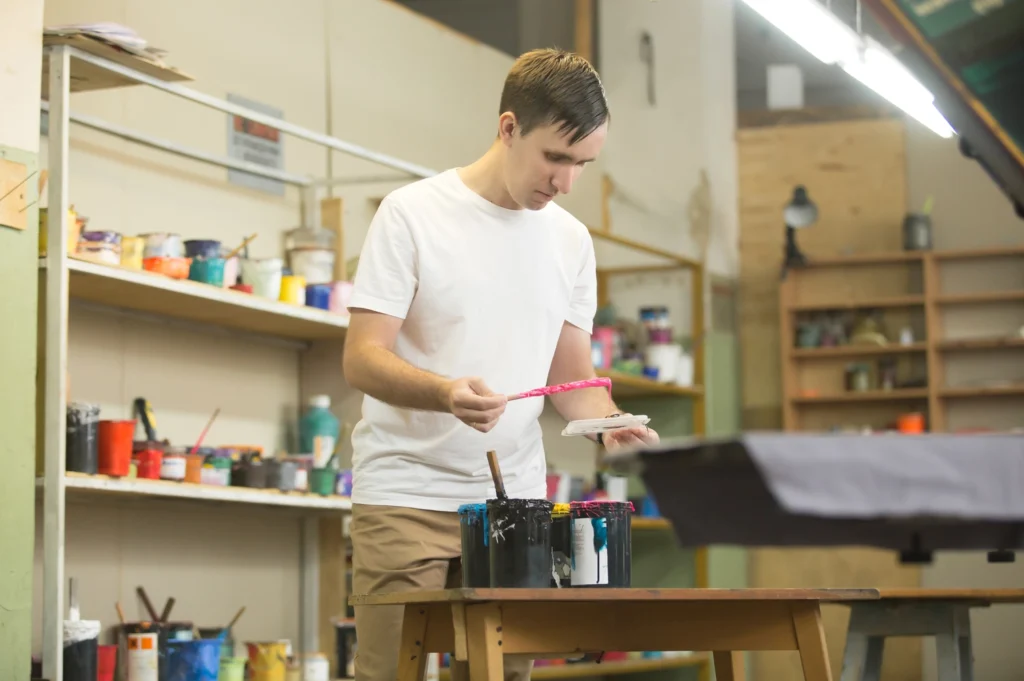
While screen printing is best known for creating custom printed apparel, it can be used on many different products and materials.
Businesses, schools, sports teams, and organizations choose screen printing for creating branded apparel designs that are durable and cost-effective, especially for bulk orders.
Here are some of the most common uses of screen printing:
1. Screen printed t-shirts
T-shirts are probably the most common use of screen printing. From company uniforms and event shirts to band merchandise and promotional clothing, screen printing is widely used for t-shirt printing because it creates bright, long-lasting designs.
2. Custom hoodies and sweatshirts
Screen printing is also a popular choice for custom printing different types of hoodies and sweatshirts.
Since these garments usually have thicker fabrics, screen printing helps create strong prints that stand out while maintaining a comfortable feel.
3. Sports uniforms and team apparel
Sports teams also use screen printing for jerseys, practice shirts, and team uniforms. It allows teams to add:
- Team names
- Player numbers
- Logos
- Sponsor branding
4. Promotional products
Screen printing is also used for promotional merchandise. Companies use it to create branded products such as:
- Tote bags
- Caps
- Event shirts
- Giveaways
- Corporate apparel
5. Workwear and uniforms
Many businesses choose screen printing for employee uniforms because it provides a professional look while remaining affordable for bulk orders.
Restaurants, construction companies, service businesses, and organizations often use screen printed apparel to display their brand identity.
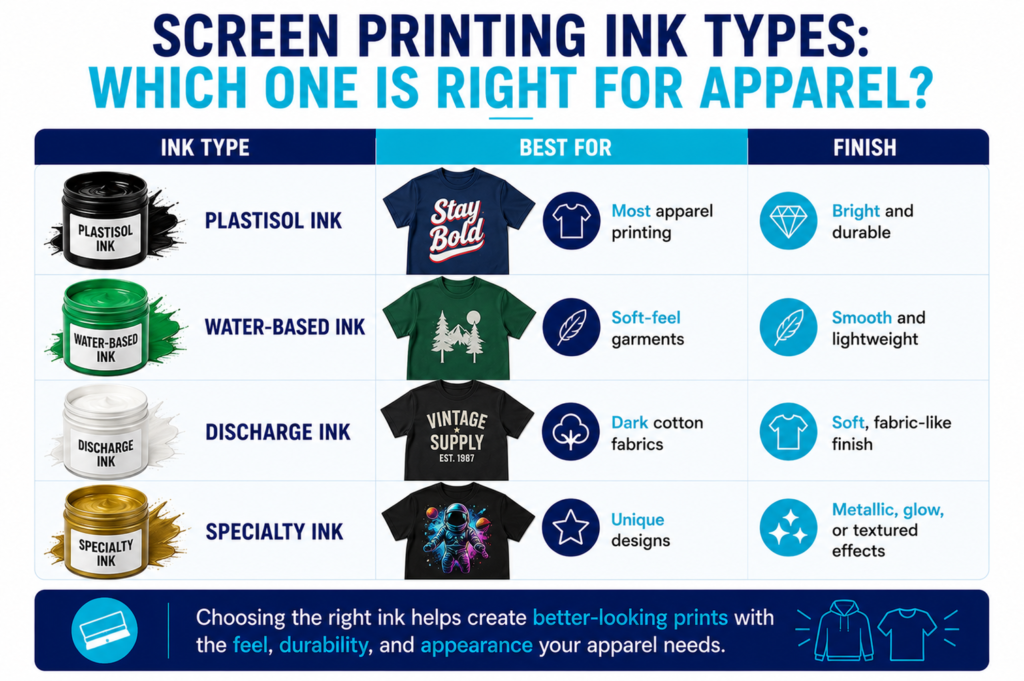
What are the benefits of screen printing?
Now that you know what is screen printing and how it works, let’s talk about why it is one of the most popular printing methods today.
The biggest reason businesses choose screen printing is because it offers a combination of durability, quality, and affordability.
Here are some of the main advantages of screen printing:
1. Long-lasting prints
Since the ink is applied directly onto the material and properly cured, the print can withstand regular washing and everyday use. This makes screen printing a great option for uniforms, workwear, and apparel that needs to last.
2. Vibrant and bold colors
Screen printing is known for producing bright and eye-catching designs.
The thick layers of ink allow colors to appear bold and highly visible, even on darker fabrics. This is especially useful for brands that want their logos or designs to stand out.
3. Cost-effective for bulk orders
Screen printing becomes more affordable as the quantity increases. That’s because once the screens are prepared, the same design can be printed on hundreds or thousands of products efficiently.
This is why many businesses, schools, and sports teams choose screen printing for large apparel orders.
4. Works on different materials
Another advantage of screen printing is its flexibility. It can be used on different fabrics and materials, including:
- Cotton
- Polyester
- Cotton blends
- Canvas
- Some synthetic materials
5. Professional finish
Screen printing creates a clean and professional appearance.
Whether it is a company logo, team design, or promotional message, screen printing helps create apparel that looks consistent and high quality.
Screen printing vs digital printing: What’s the difference?
| Feature | Screen Printing | Digital Printing |
| How the design is applied | Ink is pushed through a mesh screen onto the material | Ink is printed directly onto the fabric using a digital printer |
| Best for | Bulk orders and simple designs | Small orders and detailed designs |
| Color options | Works best with solid and bold colors | Better for complex, full-color images |
| Print durability | Highly durable when properly cured | Depends on the printing method and fabric |
| Cost | More affordable for large quantities | More cost-effective for smaller quantities |
Both methods have their own advantages. The right choice depends on factors like the type of design, number of colors, order quantity, and the final look you want.
Heat transfer vs screen printing: What’s the difference?
| Feature | Screen Printing | Heat Transfer |
| Printing method | Ink is applied directly through a screen | Design is transferred using heat and pressure |
| Best for | Bulk apparel orders | Small batches and custom designs |
| Durability | Very durable with proper curing | Depends on the transfer material used |
| Design flexibility | Great for bold designs | Works well for detailed designs |
| Setup | Requires screen preparation | Usually requires less setup |
Both DTF heat transfer and screen printing use heat, but the actual printing process is different.
With heat transfer printing, a design is printed onto a special transfer material and then applied to the garment using heat and pressure.
Screen printing, on the other hand, applies ink directly onto the fabric through a mesh screen.
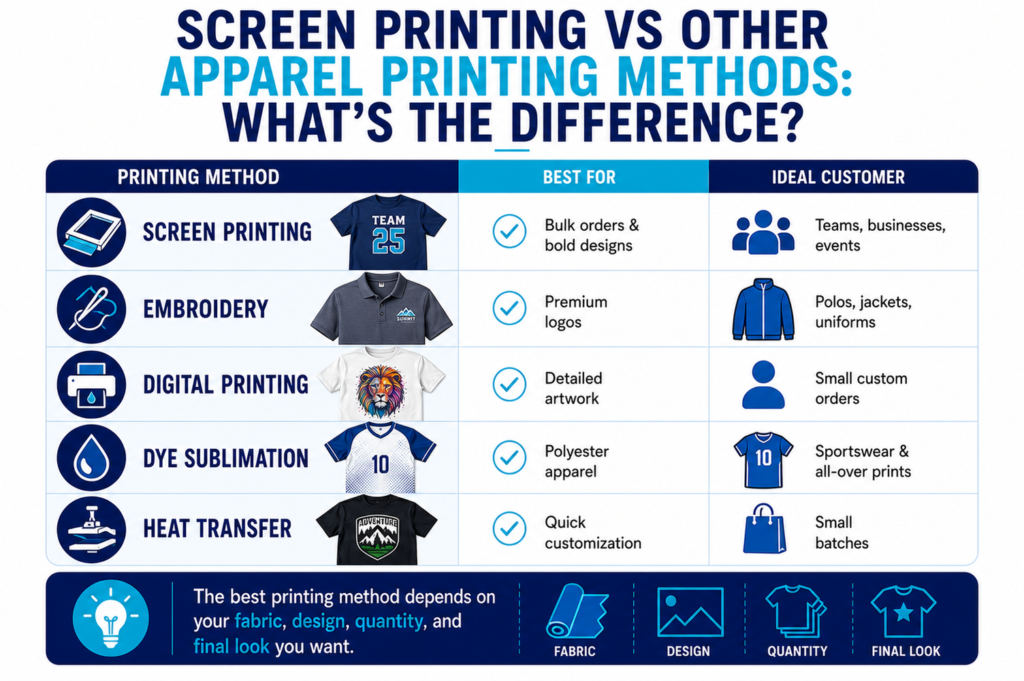
What is the best fabric for screen printing?
While screen printing can work on many different materials, some fabrics provide better results than others.
Cotton is considered one of the best fabrics for screen printing because it absorbs ink well and creates vibrant, long-lasting prints.
Cotton blends and polyester fabrics also work well, depending on the type of ink and printing method used.
Some of the most common fabrics used for screen printing include:
- 100% cotton
- Cotton blends
- Polyester
- Tri-blend fabrics
From embroidery to screen printing and custom patches, we help you create high-quality custom apparel that stands out.
Final words
By now, I am sure you have a clear understanding of what is screen printing, how it works, and why it remains one of the most popular apparel printing methods.
Simply put, screen printing is a printing method that uses a mesh screen, stencil, and ink to transfer designs onto fabrics and other materials. And it is especially popular for businesses, teams, schools, and organizations because it offers:
- Durable and long-lasting prints
- Bright and bold colors
- Cost-effective bulk printing
- Professional-looking designs
- Reliable results for custom apparel
So, whether you need screen printed t-shirts, team uniforms, company apparel, or promotional products, screen printing is a trusted choice for creating high-quality custom clothing.
Got more questions or looking to create custom printed apparel for your business, school, or team?
You can get in touch with us!
At 5 Star Apparel, we provide high-quality custom apparel printing to help your brand stand out.
Whether you need custom T-shirts, team uniforms, workwear, promotional apparel, or branded clothing, our team is here to help bring your ideas to life with quality you can count on.
FAQs about screen printing
What is screen printing?
Screen printing is a printing method that uses a mesh screen, stencil, and ink to transfer a design onto a material.
The ink passes through open areas of the screen and creates a printed design on products like T-shirts, hoodies, uniforms, and promotional items.
How does screen printing work?
Screen printing works by creating a stencil on a mesh screen and pushing ink through the open areas onto the material.
For designs with multiple colors, each color is printed separately using a different screen. The final print is then cured using heat to improve durability.
Is screen printing durable?
Yes.
Screen printing is known for producing durable prints that can withstand regular washing and everyday use when properly applied and cured. This makes it a popular choice for uniforms, workwear, and custom apparel.
What is the best fabric for screen printing?
Cotton is one of the best fabrics for screen printing because it absorbs ink well and creates vibrant results.
However, cotton blends and polyester fabrics can also work well depending on the type of ink and printing process used.
Is screen printing better than digital printing?
It depends on your needs.
Screen printing is usually better for bulk orders, bold designs, and long-lasting prints, while digital printing is often better for smaller orders and detailed, full-color artwork.
What products can be screen printed?
Screen printing is commonly used for T-shirts, hoodies, sports uniforms, workwear, tote bags, promotional products, and branded apparel.
Anna Freeman is the owner of 5 Star Apparel. With over 20 years of industry experience, she brings expert insights on embroidery, screen printing, and branded apparel, helping businesses and organizations bring their ideas to life with confidence and style.