What Is UV DTF Transfer And How Does It Work?

Written By
Anna Freeman
Have you ever seen those glossy, raised designs on bottles, phone cases, or glass surfaces?
They look sharp, vibrant, and almost like a sticker, but much more premium and long-lasting.
That’s UV DTF printing, one of the fastest-growing printing methods right now, especially for customizing hard surfaces without using heat.
And if you’ve worked with sublimation printing or DTF before, this might feel like a whole new level of convenience.
In this blog, I will explain everything about UV DTF in a simple way so you can understand exactly how it works and whether it’s right for you. You’ll know:
- What is UV DTF
- How UV DTF printing works step by step
- The tools and supplies you need
- Where UV DTF is used
- What is the difference between DTF and UV DTF
And much more.
So, let’s get started.
Key takeaways
- UV DTF is a printing method that creates adhesive transfers using UV-cured ink
- It works best on hard surfaces like glass, plastic, metal, and wood
- No heat press is required, just peel and stick
- Designs are vibrant, durable, and slightly raised
- It uses a special film system (A film and B film) to transfer designs
- It is ideal for custom products like bottles, mugs, phone cases, and more
What is UV DTF?
UV DTF, short for Ultraviolet Direct-to-Film, is a printing method that creates high-quality, adhesive designs that can be transferred onto hard surfaces.
Here, instead of printing directly onto an object, the design is first printed onto a special film using UV ink. Then, that design is transferred onto the final surface like a sticker.
The ink is cured instantly using UV light, which makes the design:
- Durable
- Waterproof
- Scratch-resistant
- Slightly raised for a premium feel
We create high-quality custom letterman jackets for your school, team, business, or organization that leave a lasting impression.
What is a UV DTF transfer?
A UV DTF transfer is the final printed design that you apply to a surface.
It comes as a two-layer film system, namely:
- A film (carrier sheet) that holds the printed design
- B film (adhesive layer) that helps transfer the design onto the surface
Here’s how it feels in real life:
You peel the backing, place the design on your item, press it down, and remove the top layer.
That’s it.
There’s no need for a heat press or any complicated setup.
The best part: You get a clean, professional-looking design that sticks firmly and lasts a long time.
How did UV DTF printing start?
UV printing itself has been around for years, mainly used in industrial and commercial printing. But combining it with film transfer technology (DTF) is what created UV DTF.
This innovation made it possible to:
- Print designs using UV ink
- Transfer them easily onto different surfaces
- Skip direct printing on objects
As a result, UV DTF became a practical solution for small businesses, custom product makers, and print-on-demand sellers.
Today, it’s widely used for creating high-quality custom items without complex machinery.
Why is UV DTF printing so popular?
UV DTF printing has quickly gained attention, especially among small businesses and crafters.
And here are a few reasons for its popularity:
1. No heat press required
Unlike sublimation, screen printing, or traditional DTF, UV DTF doesn’t need heat.
This makes the process:
- Faster
- Easier
- More beginner-friendly
2. Works on almost any hard surface
One of the biggest advantages of this printing technology is its versatility. So much so that you can apply UV DTF transfers on glass, plastic, metal, wood, acrylic, ceramic, and more.
This opens up a huge range of products you can customize.
3. Premium look and feel
UV DTF prints aren’t flat. Instead they have a slightly raised texture that gives a glossy finish and high-end appearance
This instantly makes products look more professional.
4. Strong and long-lasting
UV-cured ink is tough and it resists water, scratches, fading, etc., among others. So your designs stay vibrant even with regular use.
5. Perfect for small businesses
If you’re selling custom products, UV DTF is a great option because:
- You don’t need heavy equipment like heat presses
- You can produce items quickly
- The results look premium
How does UV DTF printing work? (step-by-step workflow)
At its basic, UV DTF printing is a simple process that creates a design on film and transfers it onto a hard surface.
But what makes it unique is how the ink behaves.
You see, instead of drying naturally, the ink here is instantly cured using UV light, which makes it strong, glossy, and ready to transfer.
Let’s see how it works step by step:
1. Create or select a design
Just like any printing method, everything starts with a design. You can use tools like Adobe Photoshop, Illustrator, or Canva to create a design.
This is where you decide:
- Colors
- Shapes
- Logos
- Text
Think of it as planning your final product before anything is printed.
If you’re new, you can start with templates and still get professional-looking results.
2. Print on A film using a UV DTF printer
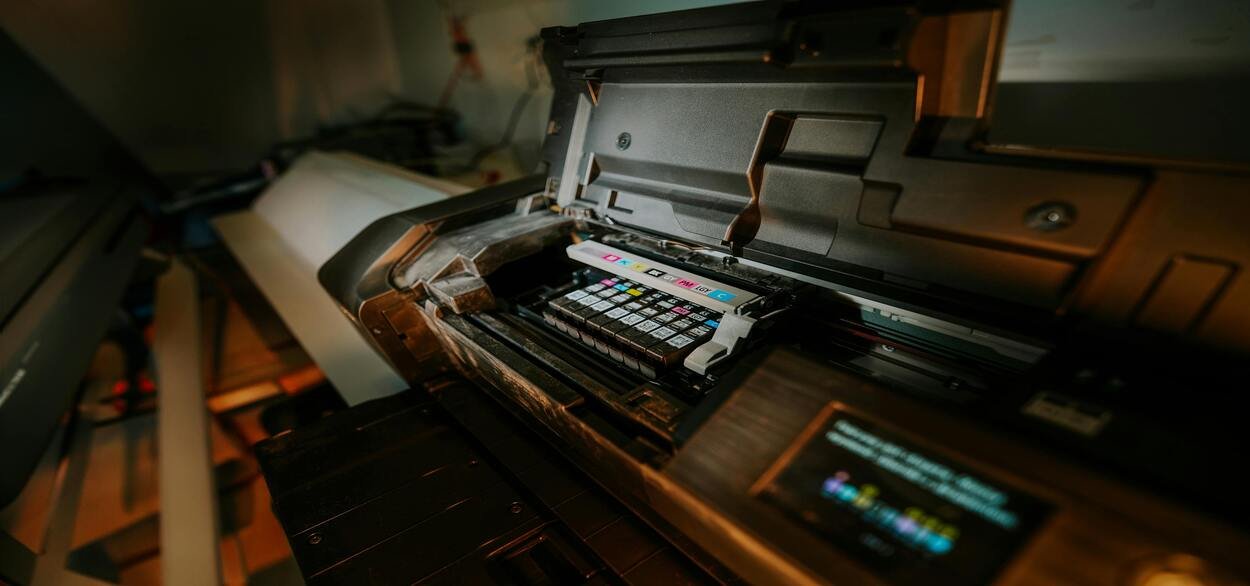
Next, the design is printed onto a special transparent DTF film called A film. This is done using a UV DTF printer, which uses UV-curable inks instead of regular ink.
Here’s what happens during printing:
- The design is printed layer by layer
- White ink is often added underneath for opacity
- UV light instantly cures (hardens) the ink
It is because of this that the design comes out sharp, vibrant, and slightly raised.
This step is where the quality of your final print is determined.
3. Apply the B film (adhesive layer)
Once the design is printed, a second sheet called B film is applied on top. This film contains adhesive that will help transfer the design onto the final surface.
When pressed together:
- The design sticks to the adhesive layer
- The full transfer is created
At this stage, your UV DTF transfer is ready to use.
4. Prepare the surface
Before you apply the transfer, your surface needs to be clean and smooth.
This step is simple but very important because even small particles can affect how well the design sticks.
Here, you’ve got to make sure the surface is:
- Free from dust
- Dry
- Oil-free
5. Apply the transfer (peel and stick)
Now comes the easiest part. Here, you will:
- Peel off the backing from the transfer
- Place the design onto your item
- Press it firmly
You can even use your hands or a squeegee to apply even pressure, no heat press is needed.
6. Remove the top film
After pressing, you gently peel off the top layer. What’s left behind is your final design clean, vibrant, and perfectly applied.
In short, here’s how UV DTF printing works:
| Step | What Happens | Key Details |
| 1. Create or Select a Design | Make a digital design | Use Photoshop, Illustrator, or Canva |
| 2. Print on A Film | Print using UV DTF printer | UV ink cures instantly for durability |
| 3. Apply B Film | Add adhesive layer | Creates ready-to-use transfer |
| 4. Prepare the Surface | Clean the item | Dust and oil can affect adhesion |
| 5. Apply Transfer | Peel and stick | No heat press required |
| 6. Final Result | Remove film and reveal design | Glossy, raised, long-lasting finish |
UV DTF printing supplies: What will you need?
Getting started with UV DTF printing doesn’t require a massive setup, you just need some essential tools for clean, professional results.
Here’s everything you’ll need:
| Supply | Why You Need It |
| UV DTF printer | Prints designs using UV-curable ink onto film |
| UV ink | Instantly cures under UV light for durability |
| A film (printing film) | Holds the printed design |
| B film (adhesive film) | Transfers the design onto the surface |
| Laminator (optional) | Helps bond A and B film evenly |
| Squeegee | Applies even pressure during transfer |
| Cleaning supplies | Ensures surfaces are dust- and oil-free |
With these supplies, you can start creating high-quality UV DTF transfers for a wide range of products.
Where is UV DTF printing used?
For starters, UV DTF is designed for hard surfaces, unlike sublimation (which works mainly on fabric). And that opens up a lot of possibilities for it to be used.
Here’s where it’s commonly used:
1. Drinkware
UV DTF is perfect for customizing:
- Water bottles
- Tumblers
- Mugs
Here, the designs stick well and stay vibrant even with regular use.
2. Phone cases and electronics
You can easily add custom designs to phone cases, laptop covers, and tablets. The glossy DTF finish gives these products a premium look.
3. Packaging and branding
Small businesses love UV DTF for branding. You can apply logos on boxes, bags, containers, and more.
It is a quick way to make your packaging look professional.
4. Home decor
You can use UV DTF printing to personalize items like:
- Glass frames
- Acrylic signs
- Wooden décor pieces
It is great for both personal use and selling custom products.
5. Promotional items
UV DTF works really well for keychains, pens, and corporate gifts because the prints are durable and last a long time.
6. Custom gifts
If you enjoy making personalized items, UV DTF is perfect for:
- Name-based gifts
- Special occasion items
- Unique handmade products
The results always look clean and high-quality.
Bonus: Here are the differences between DTF and UV DTF
| Feature | UV DTF | DTF (Direct-to-Film) |
| Surface | Hard surfaces (glass, plastic, metal, wood) | Fabric (cotton, polyester, blends) |
| Application | Peel and stick (no heat) | Requires heat press |
| Ink type | UV-curable ink | Textile pigment ink |
| Finish | Glossy, slightly raised | Soft, fabric-like feel |
| Durability | Scratch-resistant, waterproof | Wash-resistant but can wear over time |
| Use case | Stickers, bottles, phone cases | T-shirts, apparel |
We create high-quality custom letterman jackets for your school, team, business, or organization that leave a lasting impression.
You might also want to read: What’s The Difference Between DTF Vs Screen Printing?
Final words
I am sure that, by now, you have a clear understanding of what is UV DTF and why it is becoming such a popular printing method.
From drinkware and phone cases to packaging and home décor, UV DTF makes it easy to create vibrant, durable designs without complicated setups.
The best part?
You don’t need a heat press, and the process is simple enough for beginners while still delivering professional results.
Whether you’re starting a small business, exploring a new hobby, or looking to expand your product range, UV DTF printing is definitely worth trying.
Got more questions or want high-quality custom printed apparel?
You can get in touch with us!
At Five Star Apparel, we make custom printing simple and reliable. Whether it’s professional, workspace, or promotional apparel, we help bring your designs to life with vibrant, long-lasting results.
FAQs about UV DTF printing
What is UV DTF?
UV DTF is a printing method that uses UV-curable ink to create adhesive transfers that can be applied to hard surfaces.
The design is printed on film and then transferred onto items like glass, plastic, or metal, resulting in a durable, glossy finish.
What is UV DTF printing used for?
UV DTF printing is mainly used for customizing hard surfaces such as bottles, mugs, phone cases, packaging, and promotional items.
It is perfect for creating vibrant, long-lasting designs without using heat.
What is a UV DTF printer?
A UV DTF printer is a machine that prints designs onto film using UV ink. Here, the ihe ink is instantly cured using UV light, making the design durable and ready to transfer.
What is the difference between DTF and UV DTF?
The main difference is the surface and application method.
DTF is used for fabric and requires a heat press, while UV DTF is used for hard surfaces and works with a simple peel-and-stick process.
What is a UV DTF transfer?
A UV DTF transfer is a ready-to-use design printed on film that can be applied to a surface. It uses an adhesive layer to stick to items and creates a clean, professional finish.
Is UV DTF printing good for beginners?
Yes, UV DTF printing is beginner-friendly.
The process is simple and doesn’t require heat pressing, making it easy to learn and use for creating custom products.
Is DTF and DTG the same thing?
No, they are different.
If you read my last blog on the difference between DTG and embroidery printing, you might already have some idea about what DTG is.
You see, the main difference lies in how the ink is applied to the fabric. DTG prints the design directly onto the garment like an inkjet paper printer, while DTF prints the design onto a special film first, which is then heat-pressed onto the clothing.
Anna Freeman is the owner of 5 Star Apparel. With over 20 years of industry experience, she brings expert insights on embroidery, screen printing, and branded apparel, helping businesses and organizations bring their ideas to life with confidence and style.